
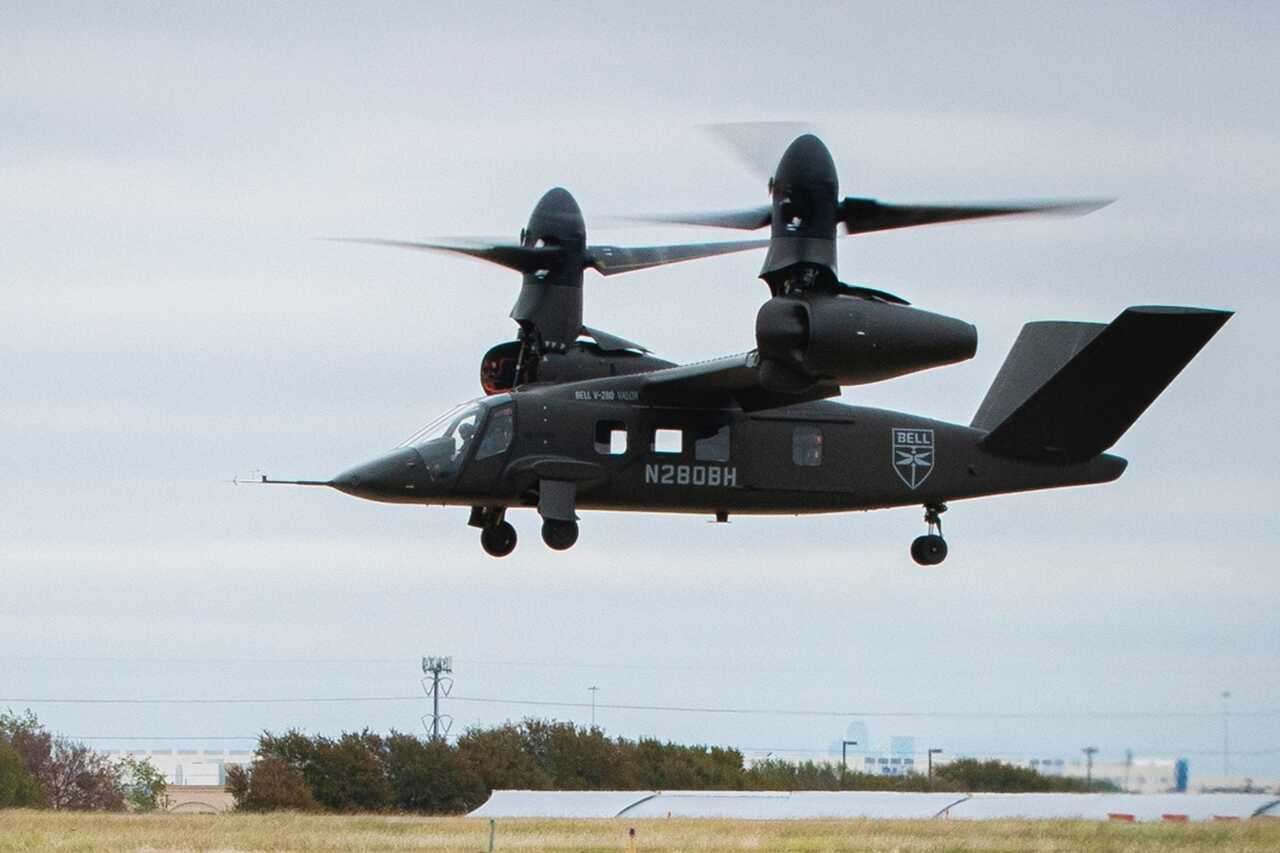
Rolls-Royce begins engine testing for U.S. Army MV-75 aircraft (Photo: Luke J. Allen)
Rolls-Royce has begun testing its AE 1107F engines to support the delivery of prototypes for the U.S. Army’s MV-75 Future Long Range Assault Aircraft (FLRAA).
In a statement released by the company, it said the AE 1107 engine tests are intended to support prototype aircraft for the MV-75 FLRAA, a next-generation platform designed to provide greater speed, range, and lethality for future U.S. Army aviation units.
Each MV-75 FLRAA is expected to be powered by two Rolls-Royce AE 1107F engines. According to Rolls-Royce, the engine was designed to deliver high power density, cyber-compatible controls, and survivability features tailored to modern combat environments.
“We continue to work closely with the U.S. Army and our industry partners to deliver a state-of-the-art propulsion solution featuring proven, low-risk AE 1107F engines and a fully integrated system design,” said Candice Bineyard, Director of U.S. Business Development and Future Programs at Rolls-Royce Defense.
Testing is underway at Rolls-Royce’s advanced manufacturing facility in Indianapolis, the company’s largest site in the United States. Over the past decade, the plant has received more than $1 billion in investment for technology enhancements, facility upgrades, and testing capabilities.
It is worth emphasizing that the Rolls-Royce AE 1107 is already in service with U.S. military forces. The engine currently powers several variants of the V-22 Osprey operated by the U.S. Marine Corps, the U.S. Navy, and the U.S. Air Force.
The engine will now serve as a key element in the development of the MV-75 FLRAA program, which is expected to replace parts of the Army’s current rotary-wing fleet with an aircraft designed for greater range and higher cruise speeds than helicopters.
Photo: Luke J. Allen. This content was created with the assistance of AI and reviewed by the editorial team.
